Benchpad vs Logseq
Logseq is local-first with a graph to tend. Benchpad is local-first with nothing to tend. If your graph keeps going stale, that's the answer.

The problem: You're spending more time gardening than writing
Logseq is a brilliant piece of software. It is a privacy-first, open-source outliner built entirely on local markdown files. If you are deeply committed to the "Personal Knowledge Management" (PKM) philosophy, it is one of the best tools available.
But adopting Logseq means adopting a second job: gardening.
Because Logseq is heavily structured around daily journals, backlinks, and block references, it demands constant administrative upkeep. To get any value out of the graph, you have to constantly link concepts together. You have to remember your tag hierarchies. You have to write queries to pull your own thoughts back out of the system.
Over time, the tool meant to capture your thoughts becomes the focus of your thoughts. You spend more time organizing your knowledge graph than actually writing. The friction of the system begins to outweigh the utility of the capture.
The solution: Local-first with nothing to tend
Benchpad is a local-first notes app with absolutely nothing to tend. We built a very sharp, very fast knife.
There are no backlinks, no block references, no queries, and no wiki-links. You get exactly three flat pads and a blinking cursor. The point is to write, not to garden.
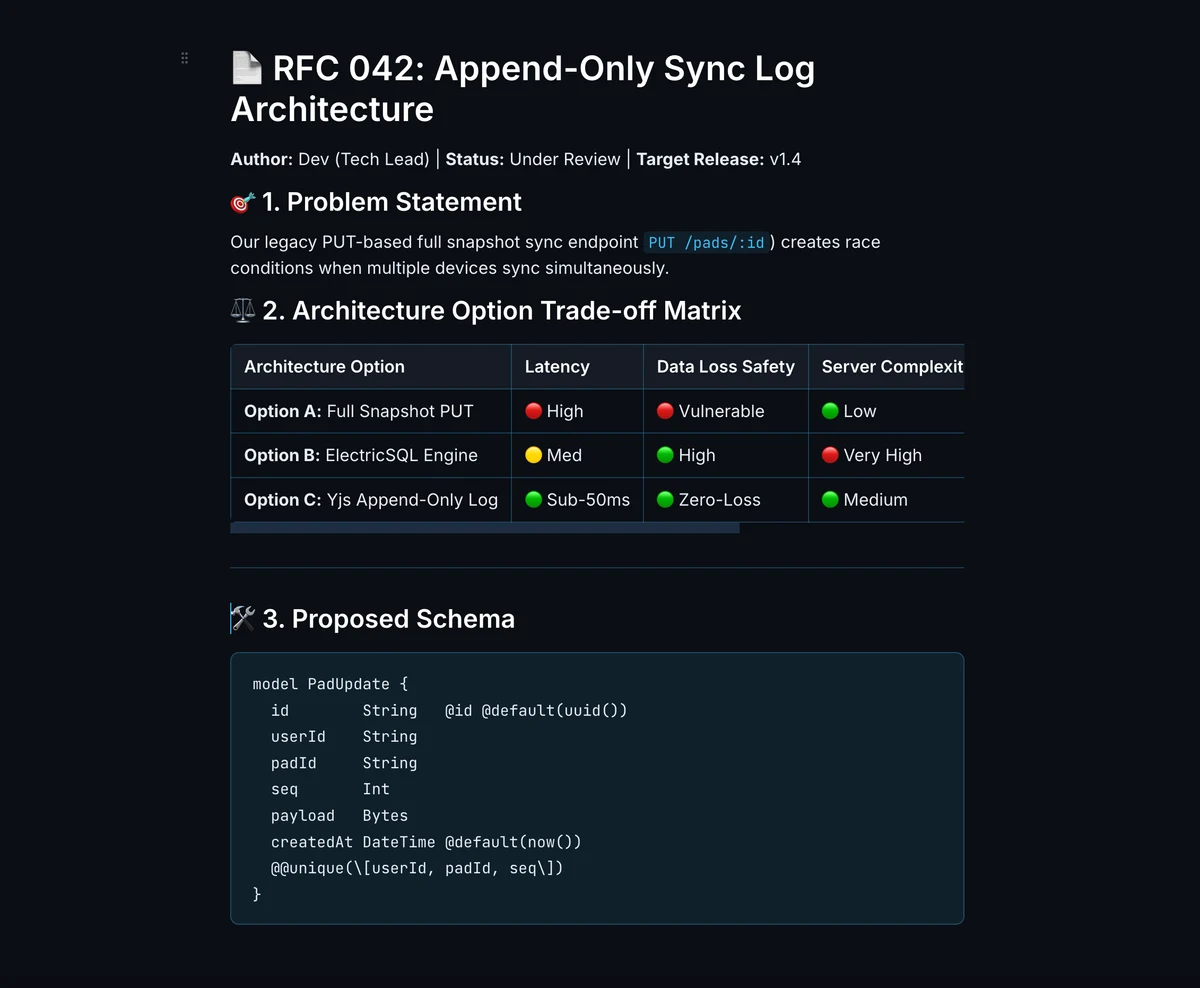 Three pads, not a knowledge graph
The honest comparison
| Feature | Logseq | Benchpad |
|---|---|---|
| Model | Outliner + knowledge graph | Three named pads, flat |
| Core features | Backlinks, block refs, queries | Markdown headings, search across pads |
| Storage | Plain markdown files on disk | Encrypted local store + full export |
| Sync | DIY, or a paid add-on | Built-in, offline-first CRDT sync |
| Pricing | Free and open source (paid sync) | Free 1-pad tier; $20/year Pro |
| Capture | App and web | Native iOS, Android, Mac, Windows, Web |
When you should use Logseq
If you want a queryable knowledge graph that you fully own as plain files on your own disk, Logseq is outstanding. It is free, open source, and has an incredibly passionate community. The backlinks and block references make it a true Personal Knowledge Management (PKM) tool. Because it operates entirely on raw markdown files on your local disk, there is no vendor lock-in and it is fully scriptable.
For people who actually finish building a second brain, it's hard to beat, and we're not going to pretend three flat pads compete with that level of data manipulation.
When to switch to Benchpad
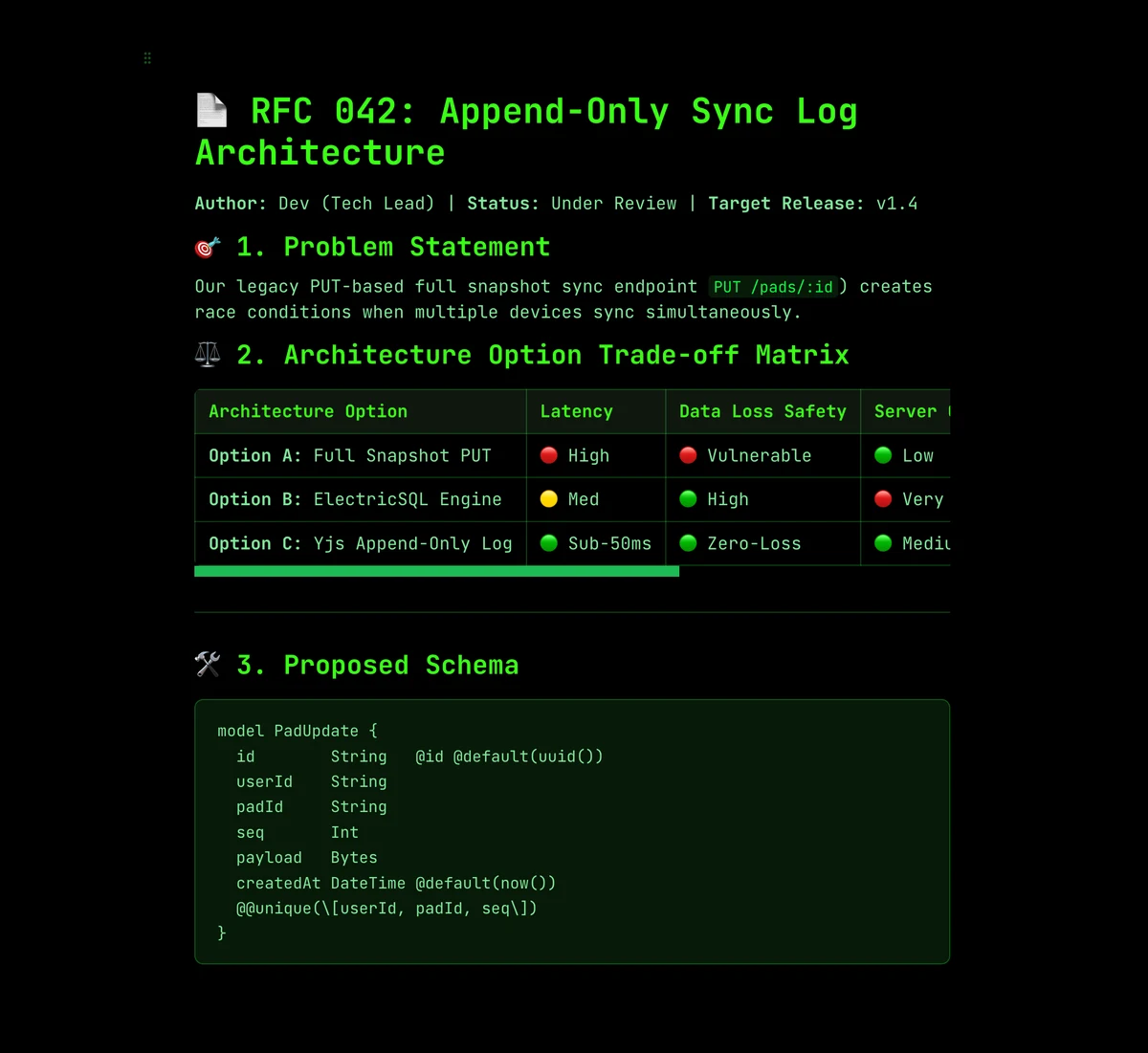 Capture from the menu bar, the browser, or your phone — synced in seconds
Nothing to learn, nothing to tend. Logseq's power carries a steep learning curve and an endless upkeep cost. Benchpad has nothing to prune, link, or query. You just open it and type.
Sync that's just there. Logseq sync is either a paid add-on or a DIY file-sync rig that you maintain yourself through GitHub or iCloud. Benchpad's sync is built-in and local-first: concurrent edits merge flawlessly and invisibly using CRDTs, with no configuration required.
Calm by constraint. There is no graph view to disappear into. There is no query syntax to look up. There is no block-reference bookkeeping. The constraints force you to focus entirely on the words on the page.
The graph and the bench
Logseq is the local-first knowledge graph for people who love the system. Benchpad is the local-first scratchpad for people who just want to think on a page.
If your Logseq graph keeps going stale between bursts of enthusiasm, that isn't a discipline failure. It's a tool mismatch.
Give yourself one week with the flat version. Write in one Benchpad pad for seven days with no backlinks at all, and notice what you actually lose.
Related: Benchpad vs Obsidian · Benchpad vs WorkFlowy · Benchpad vs Dynalist
Frequently Asked Questions
Is Benchpad local-first like Logseq?
Both are local-first: Benchpad is fully usable offline with the on-device store as the source of truth. The difference is storage and scope. Logseq keeps plain markdown files on your disk and builds a queryable graph over them. Benchpad keeps an encrypted local store with built-in cross-device sync and a full export — no graph, no queries, three pads.
Does Benchpad have backlinks and a graph like Logseq?
No, by design. Backlinks, block references, and graph queries are the heart of Logseq and the reason to choose it. Benchpad has no wiki-links and no graph to maintain. If a knowledge graph is the goal, pick Logseq. If it's the thing you keep abandoning, pick Benchpad.
Get Benchpad
On every platform
Native apps for iPhone & Android, and a Mac menu bar & Windows tray app — same three pads, offline-first, synced everywhere.