Benchpad blog
Why I keep a digital scratchpad (and what happened to my real system)
I had the perfect note system. I used it for nine days. The scratchpad I replaced it with has survived two years, three devices, and zero maintenance.

I want to tell you about my note system, because for nine days it was perfect.
It had a PARA structure. It had a daily-notes template with weather and mood fields. It had a tag taxonomy I'd written a small style guide for. I built it over a weekend, and it was genuinely beautiful — the way a model railroad is beautiful.
On day ten, an idea hit me in a parking lot, and I typed it into my texts to myself. Not into the system. The system had a place for it — that was the problem. Finding the place was work, and the idea was leaking.
The system never recovered. They never do.
The scratchpad that outlived it
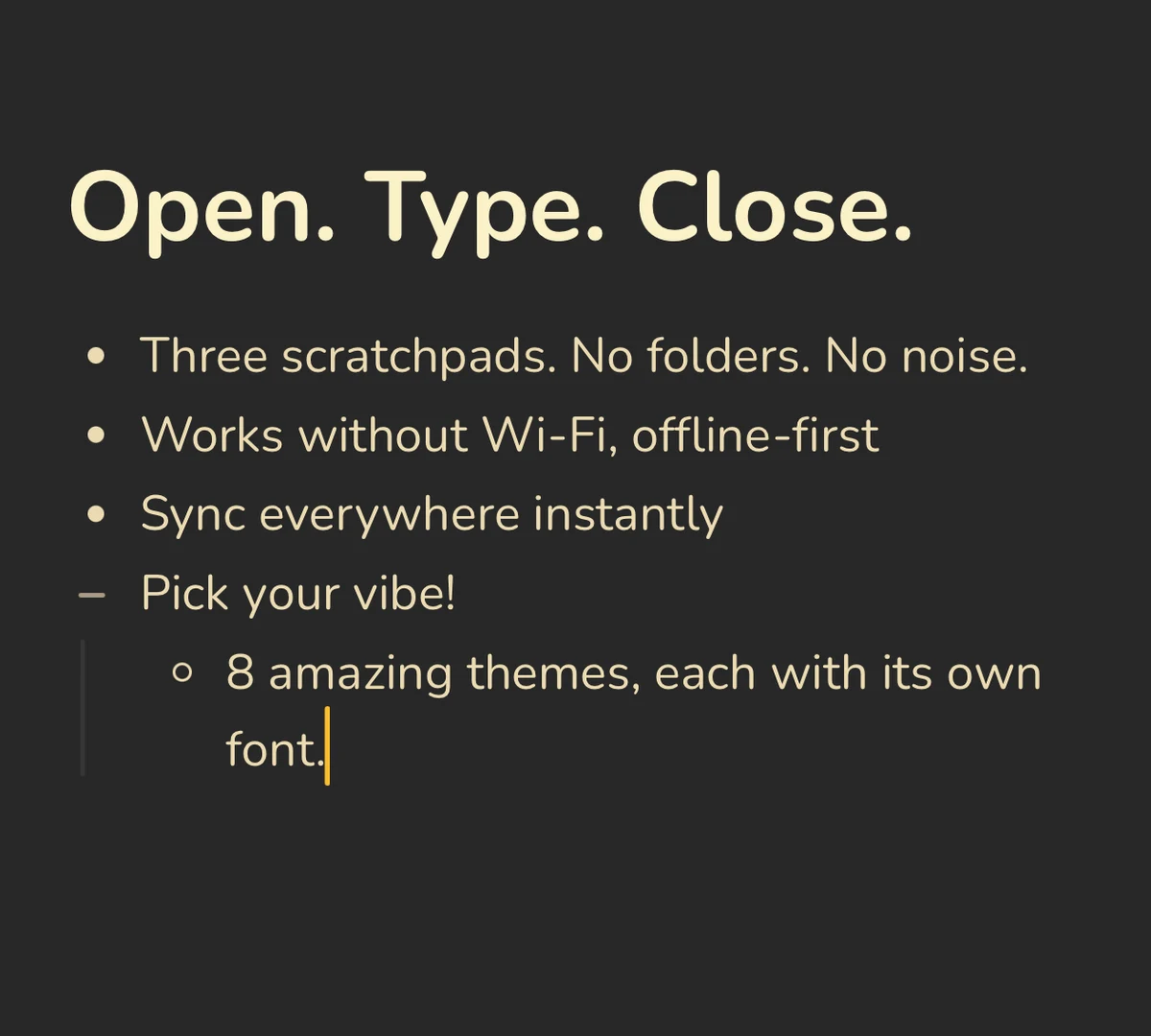 Benchpad Interface
What I actually kept using was embarrassing: one long note called "stuff," plus texts to myself, plus a folded card in my wallet for a while. Unstructured, unsearchable, half-lost.
But notice — that pile had the right shape. Zero decisions at write time. Always the same place. No maintenance debt. It failed only at engineering: it didn't sync, it didn't survive, it couldn't hold a checklist or a photo.
So that's what I fixed. Not the structure — the engineering. A digital scratchpad is the "stuff" note with the failure modes removed: it syncs, it persists, it works on a plane, and it doesn't lose the thought to a filing prompt.
Mine is three pads now. Work, Personal, Scratch. That's the entire taxonomy, and I've changed nothing in two years.
What two years of scratchpad taught me
Capture compounds; organization doesn't. Every captured thought is potential energy — some become projects, drafts, decisions. Organizing, past a very low threshold, returns nothing. It just feels like work because it is work.
The mess self-resolves if the surface is small. Three pads can't silt up the way an unlimited app can. When a pad gets crowded, I clear the finished stuff — thirty seconds, once a week or so. That's the entire maintenance burden. Compare that to "weekly review" rituals that systems demand and nobody sustains.
Most notes deserve to die, and that's fine. The old system treated every note as a future asset, which made deleting feel like vandalism. A scratchpad treats notes as thinking, and thinking is allowed to be finished. The few that matter you keep. The rest go, unmourned.
Friction decides everything. Not features. I stopped believing any app pitch that lists capabilities and started timing one thing: cold open to cursor. The scratchpad wins because at the moment of capture, it's already open in the right place — there is no wrong place.
The part I didn't expect
I write more now. Not more notes — more everything. Drafts start in the Scratch pad because starting there is free; no title, no location, no commitment. Some die there. The ones that live get moved out when they're real.
The old system made every thought ask permission to exist — where do you go, what are you called, what are you tagged? The scratchpad waves everything through and sorts the survivors later.
It turns out that's the whole trick. Catch first. Judge later. Keep the catching surface so small it can't become a project of its own.
If you've rebuilt your note system more than once, you already know how this story ends. Skip a rebuild. Get a scratchpad.
Benchpad is three scratchpads. Offline-first. Plain markdown. $10/year. Start writing free →
Get Benchpad
On every platform
Native apps for iPhone & Android, and a Mac menu bar & Windows tray app — same three pads, offline-first, synced everywhere.
Benchpad
Try it free.
No credit card required.