Benchpad blog
The best tool is the one you don't think about
Great tools disappear when you use them. If you're thinking about your note app more than your notes, something is wrong.
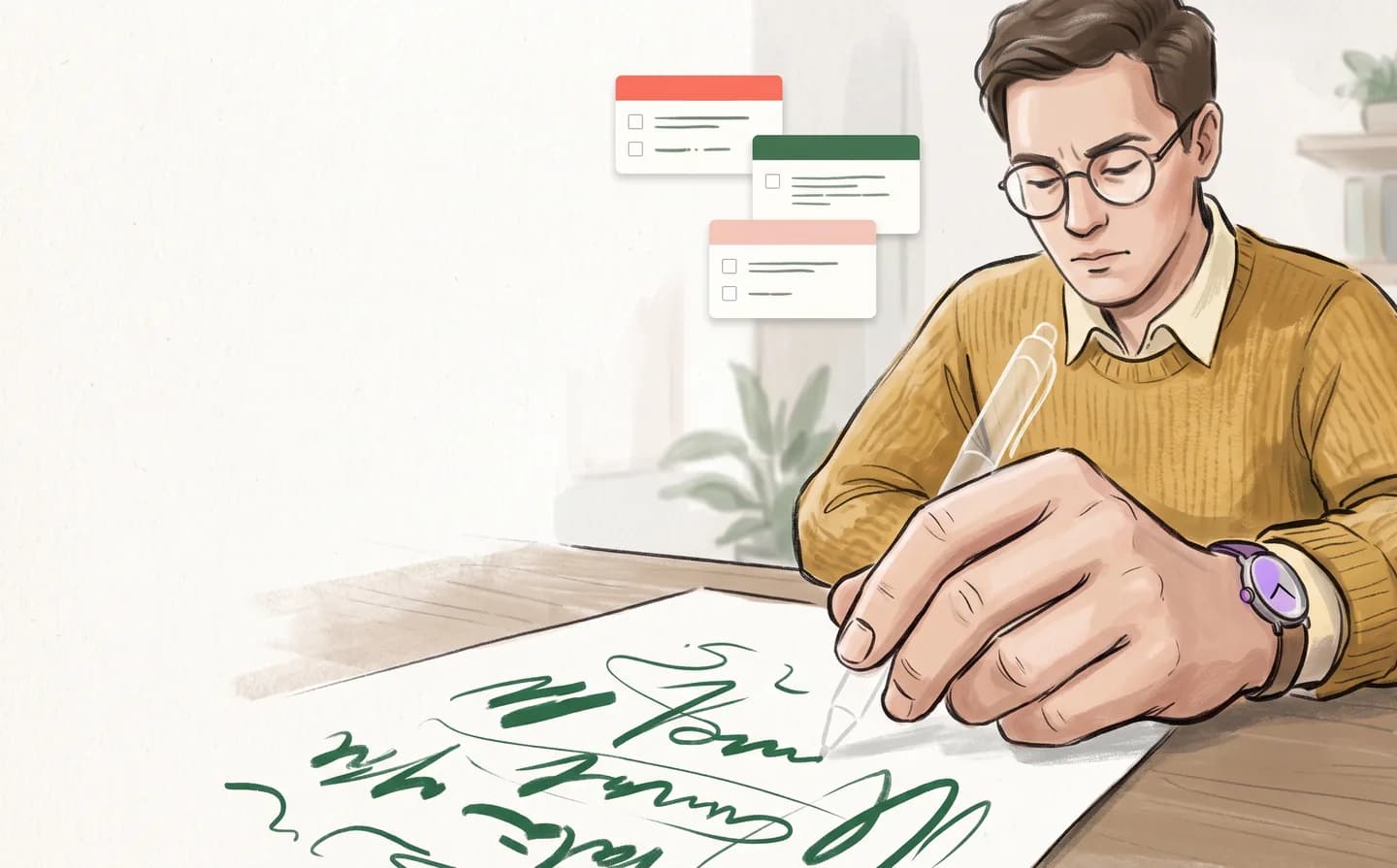
Think about a hammer. You don't think about a hammer when you're using it. You think about the nail. The hammer is a means. It's invisible in practice, even though it's the thing in your hand.
Now think about your note app. How much time do you spend thinking about the app itself? The layout, the organization, the features, the sync issues, the mobile experience? If the answer is "more than a few minutes a month," the tool is too visible.
The invisible tool test
Good tools pass what you might call the invisible tool test: when you're using them, you forget they exist. Your attention is on the work, not on the thing enabling the work.
A pen passes this test. So does a well-made screwdriver, a fast car on an empty road, or a text file you've been using for three years.
Most modern software fails this test completely. Modern software wants to be seen. It has a personality. It updates with new features. It has a community. It wants to be part of your identity. You don't just use Notion — you're a "Notion user."
This is backwards. A note app should be as interesting as a hammer, which is to say: not at all. It should do its job and recede.
Why tools become visible
Tools become visible for three reasons:
1. Friction. If a tool is slow, buggy, or requires internet when you don't have it, you notice the tool. Every loading spinner is the tool waving at you and saying "remember, I exist."
2. Decisions. If a tool asks you to make choices before you can start working — where to save, what template, which folder — you're thinking about the tool instead of the work. Each decision is a small interruption.
3. Features. This is the counterintuitive one. More features means more surface area, which means more things to notice, configure, and maintain. A tool with 50 features is visible in a way that a tool with five features cannot be.
The cost of a visible tool
When your tool is visible, it costs you in three ways:
Context switching. Every time you think about the tool instead of the work, you context-switch. Research on context switching is clear: it takes about 23 minutes to fully refocus after an interruption. The interruption doesn't need to be large. Noticing a sync error, dismissing a feature update, or searching for the right folder — each is a micro-interruption.
Decision fatigue. Tool decisions drain the same cognitive resources as work decisions. If you spent energy deciding where to file a note, you have less energy for the note itself.
Maintenance time. Visible tools need tending. Reorganizing files. Updating settings. Learning new features. This isn't productive time — it's overhead.
Designing for invisibility
Benchpad is designed to be invisible. This isn't a marketing claim — it's a specific set of design decisions:
- No folders to navigate. Three pads, visible immediately.
- No templates to choose. You start typing.
- No sync to manage. Offline-first, background sync.
- No onboarding to dismiss. You open it and you're already in.
- No updates to learn. The feature set is intentionally small and stable.
The goal isn't "simple for the sake of simple." The goal is: you open the app, you write what you're thinking, you close the app. The tool never enters your attention. It stays where it belongs — in the background, like a hammer.
The attention trade
Every tool you use is competing for a scarce resource: your attention. Your code editor, your email client, your chat app, your calendar, your note app — all of them want a slice.
The tools that deserve your attention are the ones that create value proportional to the attention they demand. A code editor that helps you write better code is worth thinking about. A calendar that helps you manage commitments is worth checking.
A note app that helps you jot things down is not worth thinking about. It should just work, silently, instantly, always.
That's the standard. A tool that needs your attention to function is a tool that isn't finished yet.
Benchpad is three scratchpads. Quiet, fast, invisible. $10/year. Start writing free →
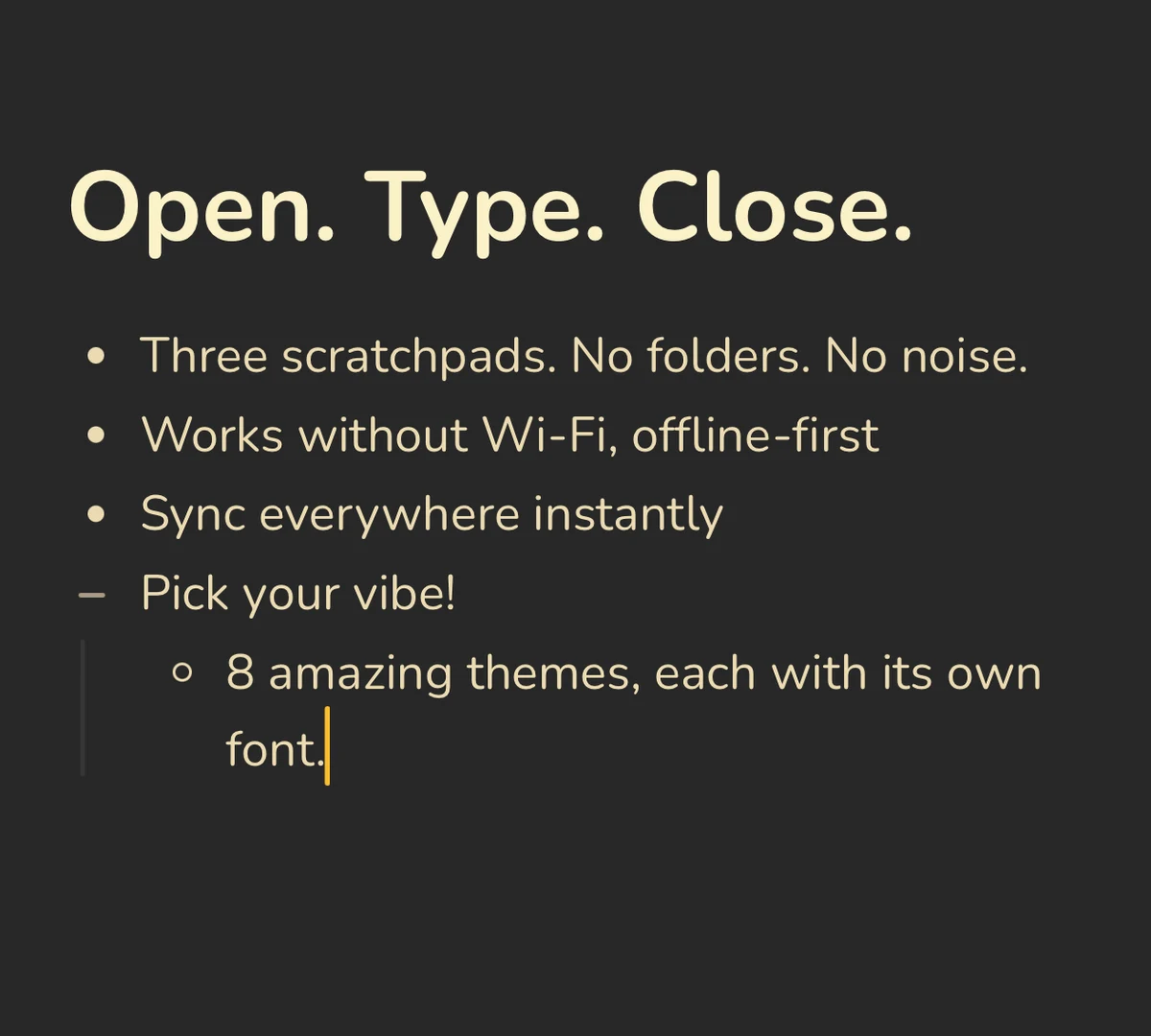 Benchpad Interface
Get Benchpad
On every platform
Native apps for iPhone & Android, and a Mac menu bar & Windows tray app — same three pads, offline-first, synced everywhere.
Benchpad
Try it free.
No credit card required.