Benchpad blog
Less software, more thinking
The best tool for thinking isn't the one with the most features. It's the one with the fewest distractions.
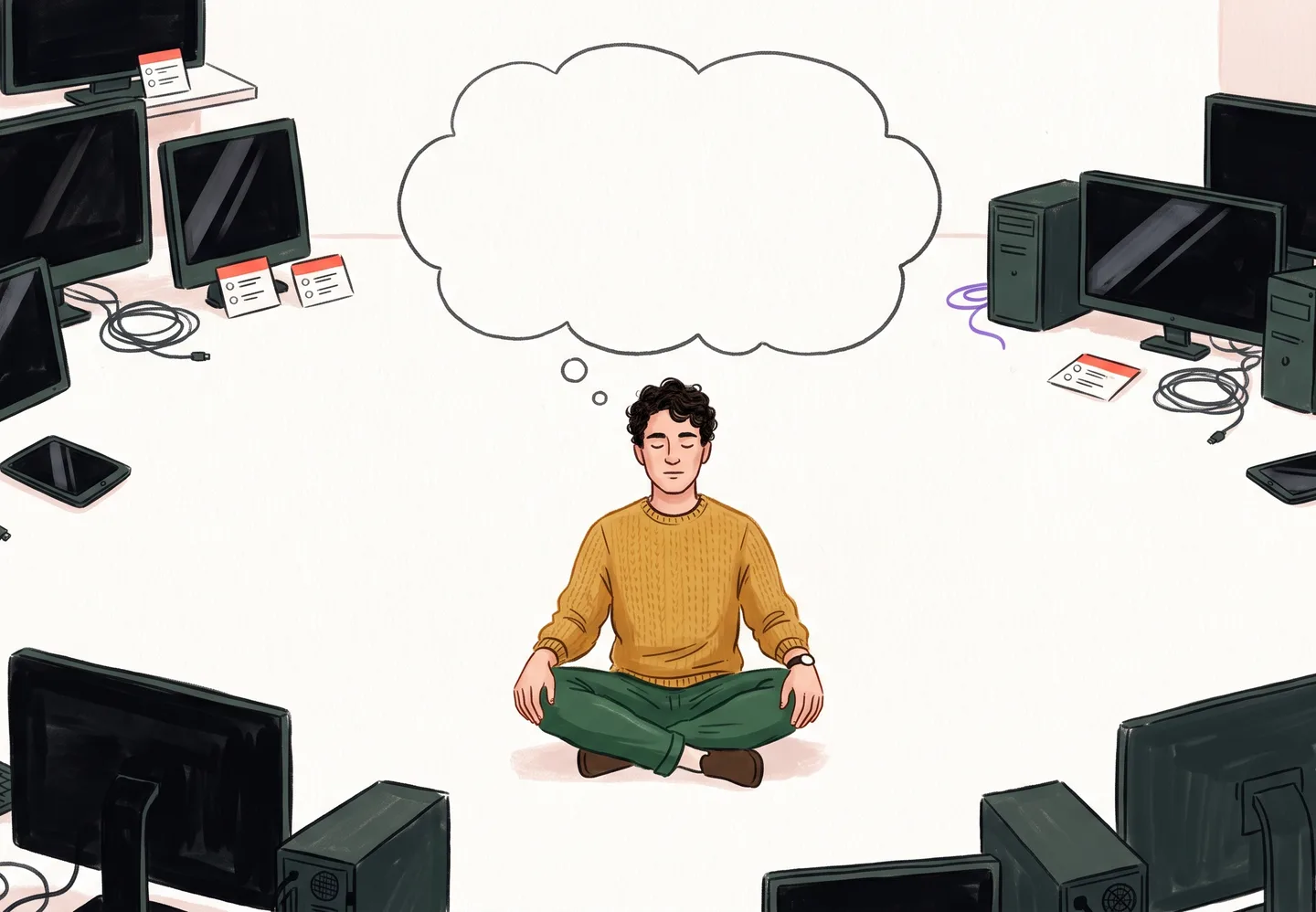
There's a specific moment in every software demo where the presenter shows you a feature you didn't know you needed. "And look — you can also link notes bidirectionally, visualize them as a graph, embed databases inline, and create automations."
Your reaction is supposed to be: "Wow, I need this."
But the correct reaction is: "How much of my time will this consume?"
The feature trap
Features are marketed as capabilities, but they function as demands. Every feature in a tool is something you could be using, should be configuring, might be missing out on.
A simple text editor demands nothing of you except words. A "productivity workspace" with databases, calendars, kanban boards, and AI assistants demands that you learn it, configure it, maintain it, and justify the time you've invested in it.
The paradox is clear: the tool designed to help you think becomes the thing you think about instead of thinking.
This is not a bug. It's the economics of software. Products that add features grow. Products that remove features confuse investors. So features accumulate, and each one adds a thin layer of friction between you and the thing you sat down to do.
What thinking actually requires
Thinking requires a blank surface and the absence of interruption.
Not a smart surface. Not a connected surface. Not a surface with AI suggestions and formatting toolbars and "recommended templates." A blank surface.
The best physical tool for thinking is still a blank sheet of paper. Not because paper has features — because it has none. You can't be distracted by paper's settings. You can't spend an afternoon customizing paper's theme. Paper doesn't suggest that you might want to organize your thoughts differently.
The best digital tool for thinking is the one that comes closest to that.
The minimalist approach to software
Minimalism in software isn't about aesthetics. It's not about white space and thin fonts (though those help). It's about removing everything that isn't the core task.
For a note-taking tool, the core task is: write something down so you can read it later.
Everything else — folders, tags, backlinks, databases, AI, templates, automations, graph views — is a guess about what you might also want. Some of those guesses are good. But every correct guess comes with the cost of being one more thing to understand, configure, and maintain.
A minimalist tool makes fewer guesses. It gives you less, which means it demands less, which means more of your attention is available for the thing you actually sat down to do.
The cost of "just in case"
Most note-app features exist because someone said "but what if a user wants to...?" and the answer was "add it just in case."
Here's what "just in case" costs:
- Every feature is a menu item, a settings toggle, or a UI element that occupies space.
- Every feature is a learning curve, even if small.
- Every feature is a decision: should I use this? Am I using it correctly? Am I missing something by not using it?
Multiply by a hundred features, and you have a tool that feels powerful in a demo but exhausting in daily use. The features you don't use still cost you — they cost attention, even if only the background attention of noticing and dismissing them.
Choosing less
Benchpad is built on a specific bet: that most people don't need a productivity workspace. They need a fast, quiet place to write things down. Three pads. No folders. No graph view. No AI. No templates.
This sounds like a limitation, and it is. It's a deliberate one. The limitations are what keep the tool from becoming another thing you need to manage.
Less software. More thinking. That's the trade.
Benchpad is three scratchpads. Offline-first. No setup. $10/year. Start writing free →
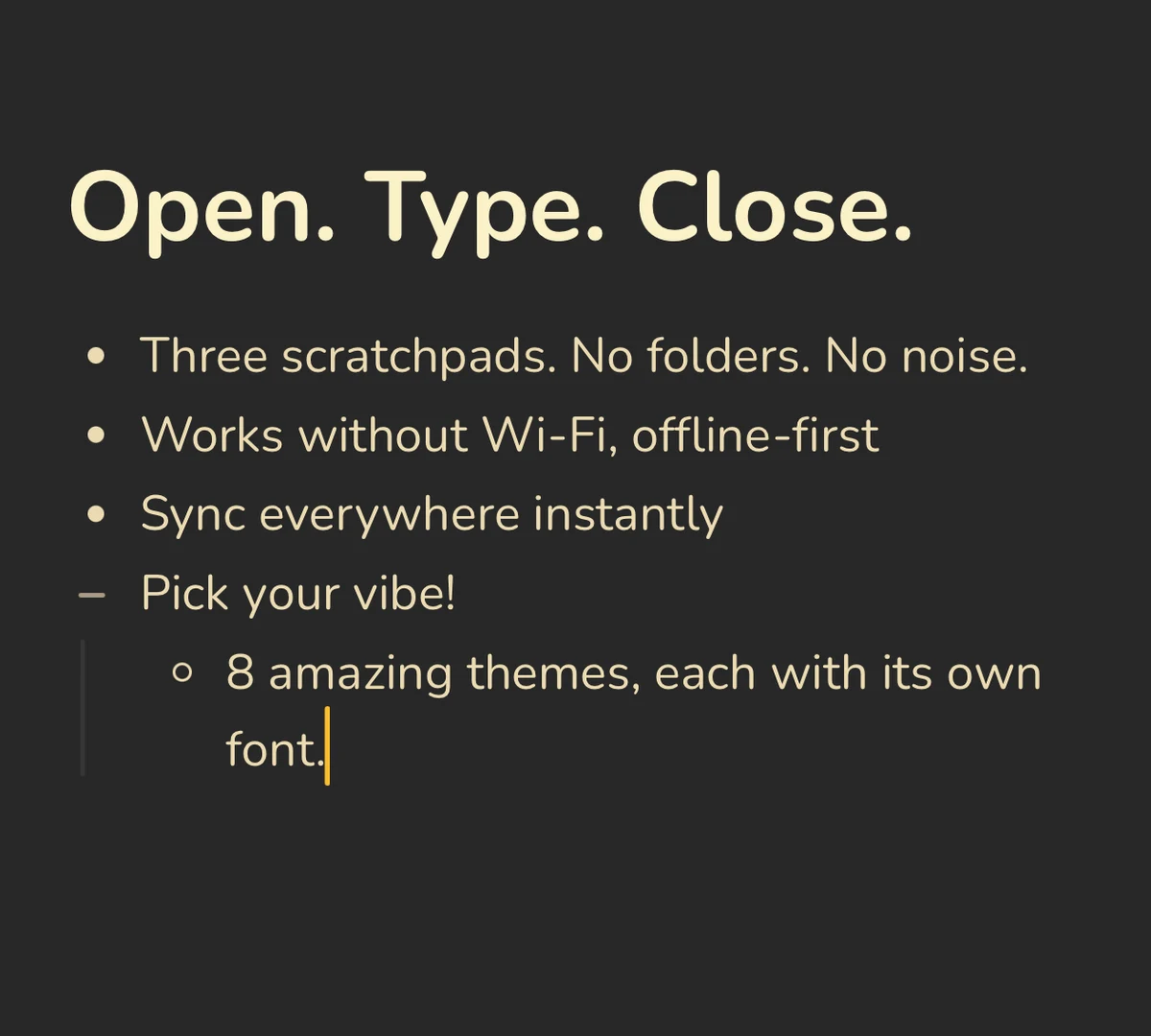 Benchpad Interface
Get Benchpad
On every platform
Native apps for iPhone & Android, and a Mac menu bar & Windows tray app — same three pads, offline-first, synced everywhere.
Benchpad
Try it free.
No credit card required.