Benchpad blog
Calm software — what it means and why it matters
Software should get out of the way. Here's what calm software is, why almost nothing qualifies, and why it's the design principle behind Benchpad.
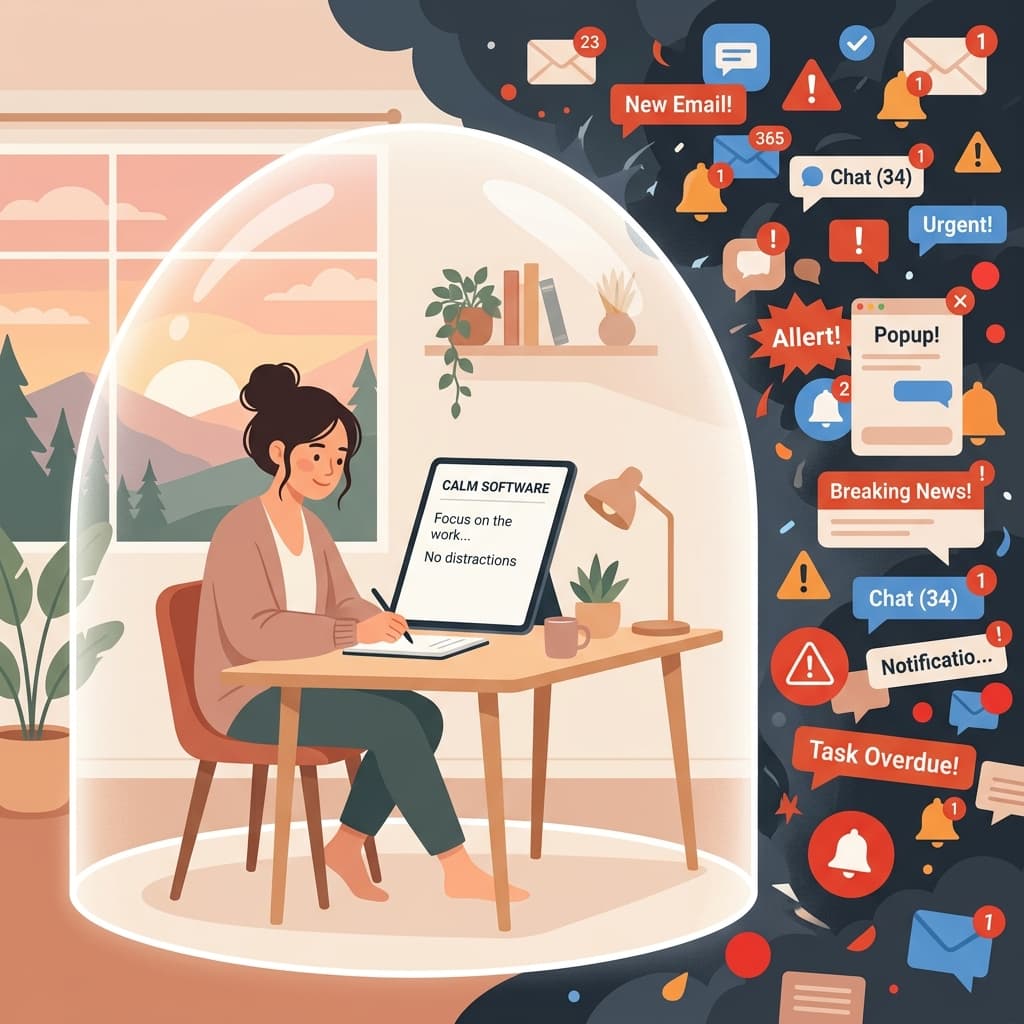
There's a phrase in product design: "calm technology." Mark Weiser coined it in the 90s. The idea is that technology should inform without demanding attention. It should reside at the periphery of your focus until you need it, then recede again.
Almost no modern software is calm.
Modern software needs you to notice it. It sends notifications, shows badges, surfaces "new features," displays onboarding prompts, and measures engagement. It wants to be opened more. It is optimized for time-in-app.
This is a problem specifically for tools that exist to help you think, because thinking requires the opposite of a demanding interface. Thinking requires quiet.
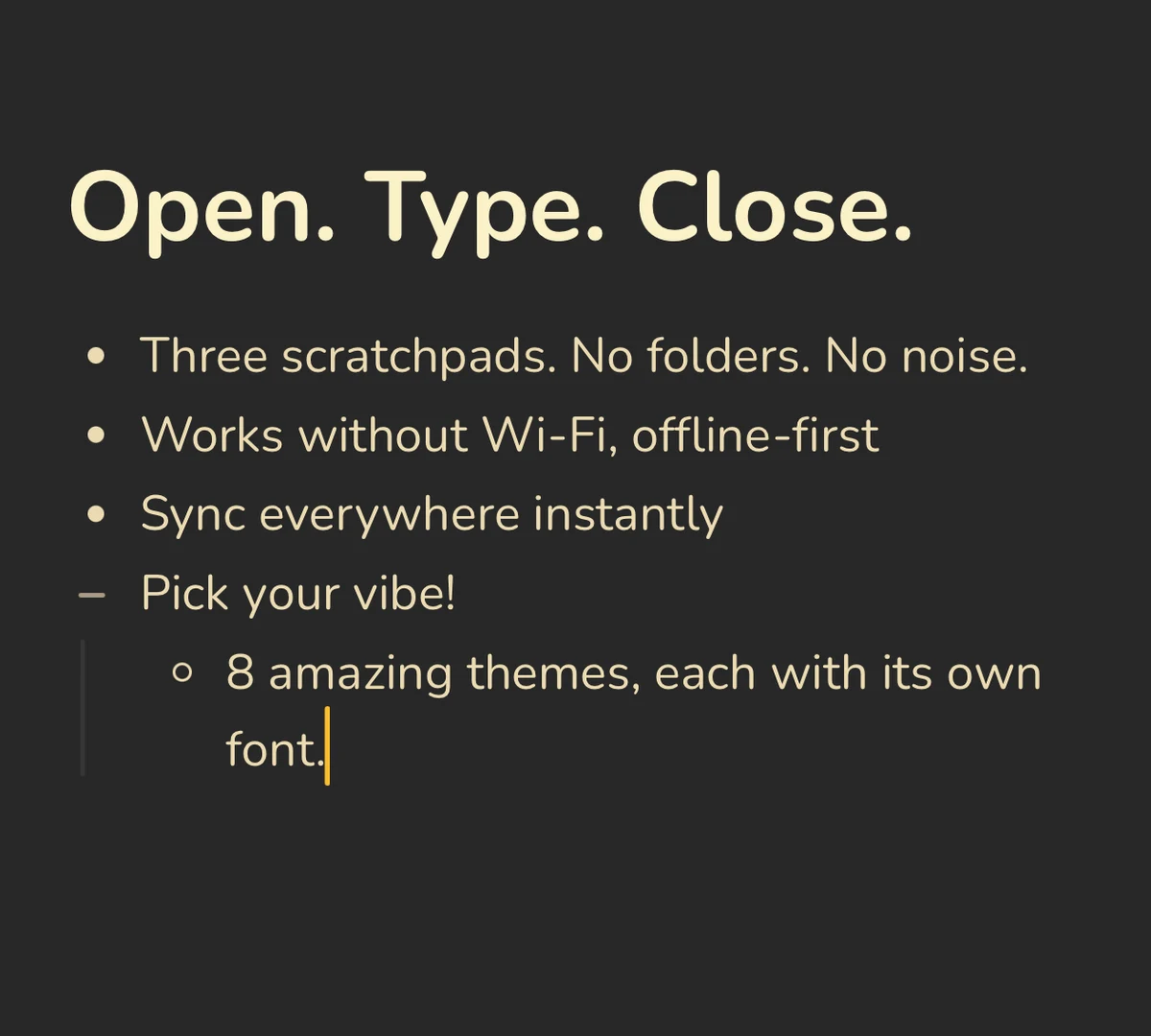 Benchpad Calm Interface — Open, Type, Close
What calm software does differently
Calm software loads immediately without needing your attention to do so.
It doesn't greet you. There's no onboarding. No "what would you like to do?" No modal asking for your use case. You open it, it's there, you use it.
It doesn't celebrate. No "You're on a 7-day streak!" No confetti. No gamification. You're writing notes, not playing a game. The note is the reward.
It doesn't nag. No "you haven't written in a while." No weekly digest. No "new feature available." It's there when you need it and invisible when you don't.
It doesn't grow. Calm software resists the pressure to add features. Every new feature is a new surface that demands attention. Fewer surfaces means fewer demands.
Why this is hard to build
Every product team faces the same pressure: metrics. Monthly active users. Session length. Retention. Revenue.
The features that improve these metrics are not the features that make software calmer. They're the features that make software more engaging — which is a polite word for demanding.
Building calm software means accepting that users will open it only when they need it. Session time will be short. Engagement, by conventional metrics, will look low. You will launch fewer features. Your product will be less impressive in a demo.
These are features, not bugs. But they require a founder or team that's optimizing for something other than engagement, which means they require a business model that doesn't depend on engagement metrics.
The calm software business model
Benchpad charges a flat subscription. There is no usage-based pricing. No per-feature pricing. No reason to optimize for how often you open the app.
The incentive alignment is straightforward: if the app is genuinely useful when you need it, you'll pay for it. If it isn't, you won't. There's no way to goose the numbers by adding notifications.
This is why calm software is almost always paid. Free software can't afford to be calm, because calm software doesn't generate the engagement metrics that attract advertisers or justify a free tier to enterprise upsells.
What calm software requires of you
One thing: the willingness to open it.
The paradox of calm software is that it won't fight for your attention. It will sit, quiet, until you need it. You have to remember to use it.
This is not a design failure. This is the design. The tools that fight for your attention are the ones that train you to need constant prompting to function. Calm tools train you to reach for them when you have something to write, which turns out to be the correct relationship with a note app.
What Benchpad is optimizing for
One thing: the moment when you have a thought and need to write it down.
That moment should be frictionless. The app should be there, open, ready, offline-capable, not asking you to do anything before you start.
Everything else — the features, the architecture, the business model — exists to make that moment work correctly.
That's calm software. And it's harder to build than it sounds.
Benchpad is three scratchpads. Offline-first. Plain markdown. $10/year. Start writing free →
Get Benchpad
On every platform
Native apps for iPhone & Android, and a Mac menu bar & Windows tray app — same three pads, offline-first, synced everywhere.
Benchpad
Try it free.
No credit card required.